
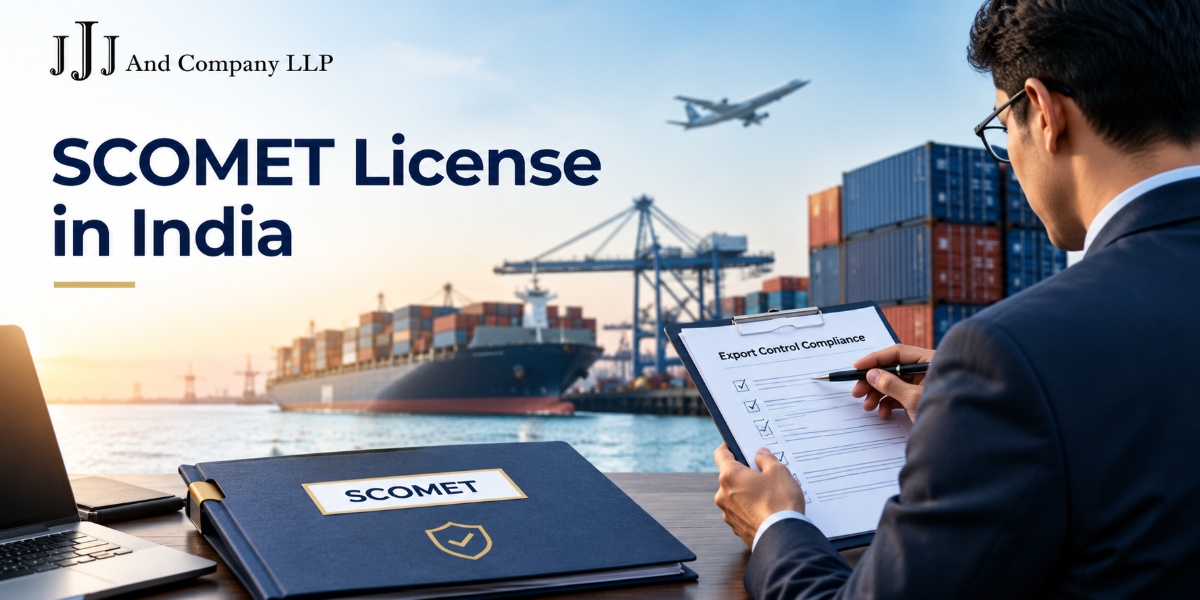
Exporting specialised products and technologies from India may require additional regulatory approval, depending on the nature of the item, its technical specifications, intended use, and destination country. One important part of India’s export control framework is the SCOMET licensing system.
SCOMET stands for Special Chemicals, Organisms, Materials, Equipment and Technologies. It covers specified dual-use items, software, and technologies that may have legitimate civilian or industrial applications but can also be used for sensitive military or strategic purposes.
For exporters, manufacturers, technology companies, and international trading businesses, understanding the SCOMET license application process in India is essential before shipping potentially controlled goods overseas.
This guide explains what a SCOMET license is, who may need one, which documents are commonly required, how to apply, and what businesses should consider to maintain compliance.
What Is a SCOMET License in India?
A SCOMET license, more accurately called a SCOMET export authorisation, is a regulatory approval required for the export of specified controlled items, subject to the applicable export policy and exemptions.
India’s SCOMET control list is contained in Appendix 3 to Schedule 2 of the ITC (HS) Classification of Export and Import Items. The list is divided into categories covering different types of sensitive materials, equipment, and technologies.
The purpose of these controls is to support responsible international trade, prevent unauthorised transfers of sensitive technology, and meet India’s strategic trade control obligations.
Exporters should not assume that an item is outside SCOMET controls simply because it is commercially available or intended for civilian use. The applicable technical specifications and control-list entries must be reviewed carefully.
Who Needs a SCOMET Export Authorisation?
A business may need SCOMET authorisation when exporting an item specifically covered by the applicable control list and subject to authorisation requirements.
Businesses that should assess their export control obligations include:
- Chemical manufacturers and exporters.
- Biotechnology and specialised biological product companies.
- Manufacturers of advanced materials and precision equipment.
- Electronics, sensor, laser, and telecommunications businesses.
- Aerospace and propulsion equipment suppliers.
- Software developers and technology companies transferring controlled software or technical information.
- Exporters dealing with specified defence-related or nuclear-related items.
The requirement depends on the actual product or technology and the applicable regulations, rather than the business’s industry alone.
Certain categories are administered by different licensing authorities. For example, the Directorate General of Foreign Trade (DGFT) handles many SCOMET categories, while Category 0 nuclear-related items fall under the Department of Atomic Energy and Category 6 munitions-list items generally fall under the Department of Defence Production, subject to applicable exceptions.
SCOMET License Application Process in India
Businesses should begin by identifying the relevant control-list entry and confirming the applicable authorisation route. The following steps provide a practical overview.
Step 1: Classify the Product or Technology
Review the product’s technical specifications against the current SCOMET list. Consider its composition, performance characteristics, functionality, software capabilities, and intended application.
A generic commercial description or customs classification alone may not be sufficient to establish whether an item is controlled.
Where classification is unclear, obtain appropriate technical and regulatory advice before proceeding.
Step 2: Identify the Applicable Licensing Authority
Determine which authority is responsible for the relevant SCOMET category and whether the proposed export is subject to any specific conditions or exemptions.
Many SCOMET applications are handled through DGFT’s online export management system. However, certain nuclear-related and munitions-list items follow separate procedures.
Step 3: Collect the Required Documents
Prepare the application information and supporting documents, including the product’s technical specifications, export contract or purchase order, end-use information, and end-user details.
The exact checklist depends on the category, application type, transaction structure, and applicable procedural requirements.
Step 4: Submit the Online Application
For applications handled by DGFT, exporters should use the official DGFT website and navigate to the relevant SCOMET export authorisation service.
Select the applicable application type and complete the prescribed form. DGFT’s published guidance distinguishes the standard SCOMET authorisation application from applications for Global Authorisation for Intra-Company Transfers (GAICT). Confirm the currently applicable form and filing requirements on the portal before submission.
Step 5: Respond to Regulatory Queries
The licensing authority may examine the application, request additional technical information, seek clarification about the end user or intended use, or consult relevant government agencies.
Providing consistent and complete documentation can help avoid preventable delays. Approval is subject to regulatory assessment and should not be assumed simply because an application has been submitted.
Step 6: Follow the Authorisation Conditions
Before shipment, verify that the authorisation covers the specific item, quantity, destination, end user, and other relevant transaction details.
The exporter must also comply with applicable customs declarations, reporting obligations, recordkeeping requirements, and any conditions attached to the authorisation.
Documents Required for a SCOMET License
The documents required for a SCOMET license in India vary according to the item and application category. The following checklist covers common supporting documents that exporters may need to prepare.
1. Import Export Code and Exporter Details
Keep your Importer Exporter Code (IEC), company details, authorised signatory information, and relevant business registration information available for the application.
2. Technical Product Specifications
Provide a clear technical description of the product or technology. Depending on the item, this may include datasheets, product catalogues, technical drawings, specifications, operating parameters, or other supporting material.
The information should be detailed enough to help determine the relevant control-list classification.
3. Purchase Order or Export Contract
Include the foreign buyer’s purchase order, relevant commercial agreement, or supply contract, as applicable. Ensure that the product description, quantities, buyer details, and transaction information are consistent across the documents.
4. End-Use and End-User Certificate
An End-Use and End-User Certificate (EUC) may be required to establish who will receive the item and how it will be used.
Depending on the applicable procedure, documentation may be needed from the foreign buyer, consignee, intermediary, and ultimate end user. The prescribed format and original-document requirements should be checked for the relevant category.
5. Foreign Buyer and Consignee Details
Prepare the names, addresses, and business information of the foreign buyer, consignee, and ultimate end user, where applicable.
The licensing authority may need to understand the transaction structure and supply chain before assessing the proposed export.
6. Technical and Commercial Supporting Documents
Depending on the application, additional documents may include the exporter profile, supply agreement, end-use explanation, previous export details, or other category-specific declarations and certificates.
Certain nuclear-related exports may require additional approvals, including radiation-safety documentation where applicable.
Important: This is a general checklist, not a universal or exhaustive document list. Always verify the latest requirements prescribed for the specific SCOMET category and application type.
Get Professional Assistance with SCOMET Licensing
Preparing a SCOMET application requires more than completing an online form. Exporters may need to coordinate technical product information, commercial contracts, end-user documentation, and regulatory declarations.
JJJ & Company LLP can help your business approach SCOMET compliance in a structured way.
Whether you are a manufacturer exporting specialised equipment, a chemical exporter, or a technology company assessing controlled products, professional assistance can help you understand the relevant process, organise documentation, and identify potential compliance gaps.
Contact JJJ & Company LLP to discuss your SCOMET licensing and export compliance requirements before proceeding with a controlled shipment.
Common Mistakes to Avoid When Applying for a SCOMET License
Exporters should avoid several common mistakes:
- Assuming that a product is uncontrolled because it has civilian applications.
- Selecting a control-list category without reviewing the technical specifications.
- Providing incomplete or inconsistent end-user information.
- Submitting product descriptions that do not match the purchase order or technical documents.
- Overlooking category-specific forms and supporting certificates.
- Shipping controlled goods before obtaining the required authorisation.
- Ignoring post-shipment reporting or recordkeeping conditions.
A documented export control review can help businesses identify these issues early and establish a more reliable compliance process.
Frequently Asked Questions
1. What does SCOMET stand for?
SCOMET stands for Special Chemicals, Organisms, Materials, Equipment and Technologies. It is India’s framework for controlling specified sensitive and dual-use items, software, and technologies.
2. Where can I apply for a SCOMET license in India?
Many SCOMET export authorisation applications are submitted online through the DGFT portal. Certain categories, including specified nuclear-related and munitions-list items, may be handled by other designated licensing authorities.
3. What documents are required for a SCOMET license?
Common documents include technical product specifications, an exporter’s details, purchase orders or contracts, end-use and end-user documentation, and other supporting declarations. Requirements depend on the product category and applicable procedure.
4. How long does it take to obtain a SCOMET license?
Processing time varies depending on the category, completeness of the application, technical assessment, interdepartmental consultations, and any additional information requested. Exporters should check the applicable official guidance and allow sufficient time before planned shipment.
5. Can I export a SCOMET item without authorisation?
If the item is subject to an authorisation requirement, it should not be exported without the required approval. Applicable exemptions and special procedures must be verified before shipment.
6. Is SCOMET authorisation required for every export?
No. The requirement depends on the item, its technical specifications, the relevant control-list entry, the destination, and applicable export policy conditions. Businesses should conduct an appropriate classification and compliance assessment.
Conclusion
SCOMET licensing is an important consideration for Indian businesses exporting controlled chemicals, specialised materials, advanced equipment, software, and technologies. Correct classification, complete documentation, suitable end-user verification, and compliance with authorisation conditions are essential parts of the process.
By understanding the SCOMET license application process and preparing the relevant documents in advance, exporters can improve their compliance readiness and reduce avoidable application errors.
JJJ & Company LLP can assist businesses in understanding their SCOMET licensing requirements and organising their export compliance documentation.
Planning a controlled export from India? Contact JJJ & Company LLP to discuss your SCOMET authorisation requirements.