

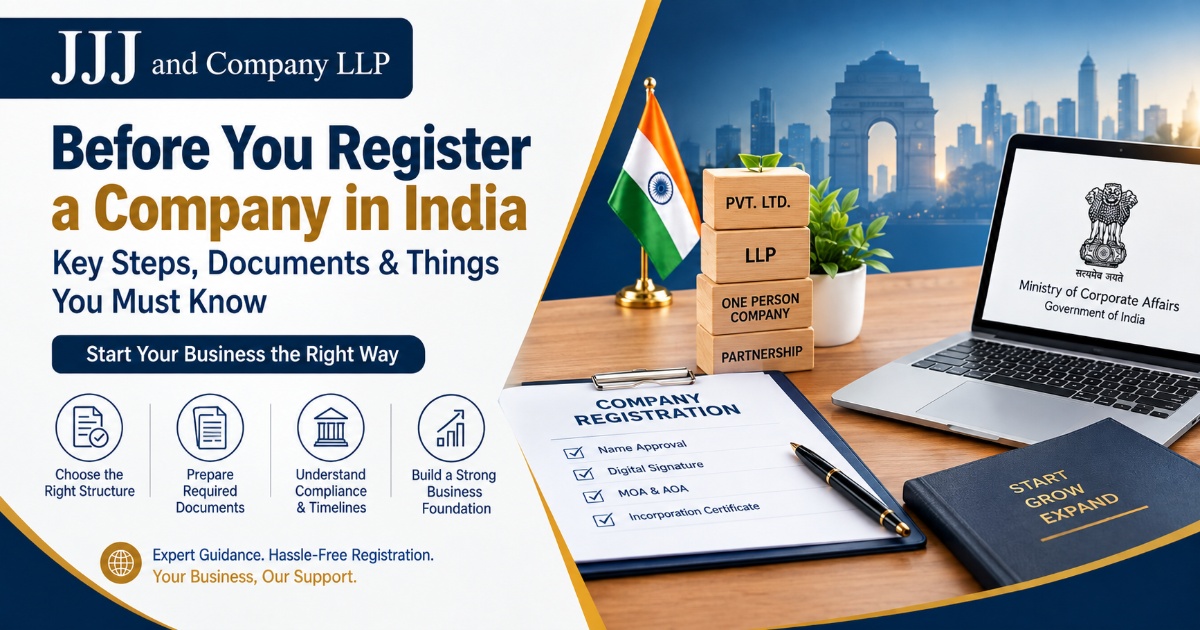
Starting a business in India is an exciting milestone, register a company in India without proper planning can create legal, tax, and compliance issues later. Many founders focus only on getting the Certificate of Incorporation from MCA, while ignoring important decisions related to ownership, taxation, GST, ROC compliance, funding, intellectual property, and regulatory registrations.
Whether you’re launching a startup, consultancy, IT company, manufacturing business, e-commerce brand, export-import company, or professional services firm, taking the right decisions before incorporation can save both time and money.
JJJ and Company LLP helps startups, entrepreneurs, Indian businesses, NRIs, and foreign investors register companies in India while ensuring complete compliance with MCA, Income Tax, GST, FEMA, and Startup India regulations.
This guide covers 25 legal and tax decisions every founder must make before registering a company in India.
Why Planning Before Company Registration Matters
Company registration is more than choosing a business name. Every incorporation decision affects taxation, compliance costs, fundraising, ownership, banking, and future expansion.
A well-planned company structure helps you:
- Avoid MCA application rejection.
- Reduce unnecessary tax liabilities.
- Stay compliant from Day One.
- Build investor-ready documentation.
- Protect founders’ ownership rights.
- Scale your business smoothly.
Planning to register your company? JJJ and Company LLP provides complete company incorporation, LLP registration, Startup India advisory, GST registration, ROC compliance, and legal documentation support across India.
25 Legal & Tax Decisions Every Founder Must Make
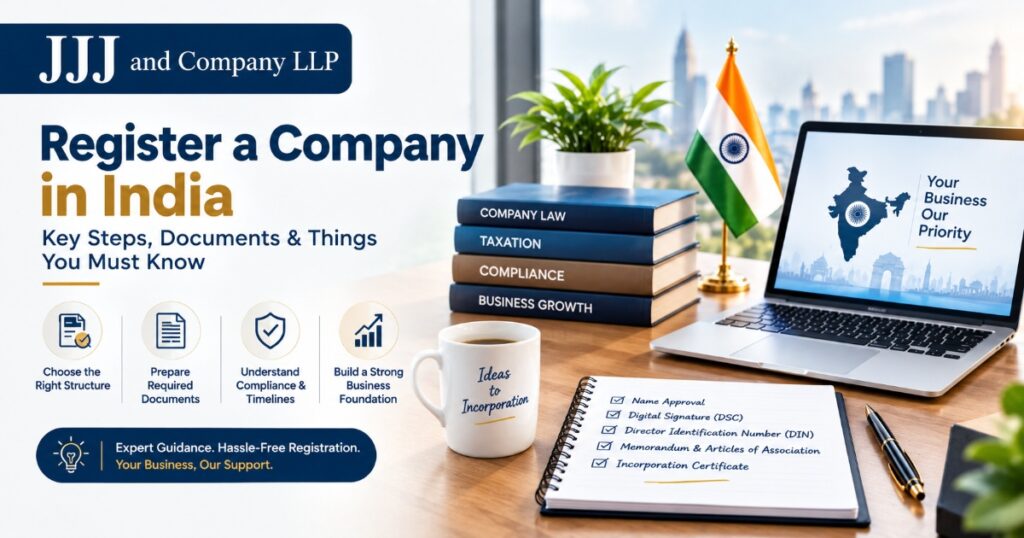
1. Choose the Right Business Structure
Selecting the correct legal structure is the first and most important decision.
Options include:
- Private Limited Company
- Limited Liability Partnership (LLP)
- One Person Company (OPC)
- Partnership Firm
- Sole Proprietorship
Choose based on ownership, funding goals, taxation, liability, and compliance requirements.
2. Decide Whether a Private Limited Company or LLP Fits Your Goals
A Private Limited Company works well for startups planning to raise investment, while LLPs often suit professional firms and service businesses.
Consider:
- Investment plans.
- Number of founders.
- Compliance budget.
- Long-term expansion.
3. Finalize Founder Shareholding
Before incorporation, decide ownership percentages among founders.
Important questions include:
- Equal ownership or performance-based ownership?
- Future ESOP allocation.
- Reserved equity for investors.
- Vesting arrangements.
A written founders’ understanding prevents disputes later.
4. Decide Who Will Be Directors and Shareholders
Directors manage the company, while shareholders own it.
Consider:
- Minimum number of directors.
- Resident director requirement.
- Foreign director participation.
- NRI shareholders.
5. Select a Business Name That Meets MCA Guidelines
Company name rejection is common when founders don’t follow MCA naming rules.
Check:
- Trademark conflicts.
- Similar company names.
- Restricted words.
- Industry-specific approvals.
Reserve multiple name options before filing.
6. Check Trademark Availability Before Registration
Many startups register companies but later discover someone owns the brand name.
Before incorporation:
- Search trademark records.
- Check domain availability.
- Verify social media handles.
- Protect brand identity early.
7. Choose the Right Registered Office Address
Every company requires a registered office for official communication.
Options include:
- Commercial office.
- Home address.
- Virtual office (where legally acceptable).
- Co-working office with proper documentation.
Keep address proof ready before filing.
8. Understand Capital Structure Before Incorporation
Founders should decide:
- Authorized share capital.
- Paid-up capital.
- Number of shares.
- Face value of shares.
A suitable capital structure simplifies future investment rounds.
9. Decide Whether You Need Startup India Recognition
Eligible startups can benefit from Startup India registration after incorporation.
Potential benefits include:
- Recognition certificate.
- Startup ecosystem access.
- Funding opportunities.
- Certain compliance relaxations subject to eligibility.
10. Plan GST Registration Requirement
GST registration is not always automatic after incorporation.
Consider:
- Turnover threshold.
- Interstate supply.
- E-commerce selling.
- Export of goods or services.
Planning GST registration avoids operational delays.
Need incorporation with GST registration? JJJ and Company LLP assists founders with company incorporation and GST registration as part of a streamlined compliance process.
11. Apply for PAN and TAN Correctly
A company requires:
- PAN for taxation.
- TAN for TDS compliance.
Incorrect information can delay banking and compliance.
12. Decide Whether You Need Import Export Code (IEC)
Businesses dealing in international trade should evaluate IEC registration before operations.
Common industries include:
- Exporters.
- Importers.
- E-commerce exporters.
- Manufacturers.
- International consultants.
13. Understand Income Tax Regime for Your Business
Different businesses have different tax planning requirements.
Evaluate:
- Corporate tax provisions.
- Startup taxation.
- LLP taxation.
- Dividend implications.
- Partner remuneration.
Early planning improves long-term tax efficiency.
14. Plan Founder Salary vs Dividend Strategy
Founders often confuse salary and dividend taxation.
Important considerations include:
- Director remuneration.
- Salary deductions.
- Dividend taxation.
- Cash flow planning.
Professional structuring helps optimize taxation within applicable laws.
15. Open a Dedicated Business Bank Account
Never mix personal and business transactions.
Prepare:
- Incorporation Certificate.
- PAN.
- Board Resolution where required.
- KYC documents.
A dedicated account supports accounting and compliance.
16. Prepare Essential Legal Agreements
Before starting operations, prepare documents such as:
- Founders’ Agreement.
- Shareholders’ Agreement.
- Employment Agreement.
- NDA.
- Vendor Agreement.
- Client Agreement.
Legal agreements reduce business risks.
17. Protect Intellectual Property Early
Startups should secure:
- Trademark.
- Copyright.
- Design registration where applicable.
- Patent evaluation for innovations.
IP protection increases brand value.
18. Understand ROC Compliance From Day One
Many founders think compliance starts after one year.
In reality, companies must maintain:
- Statutory registers.
- Board resolutions.
- Share certificates.
- Minutes books.
- MCA filings.
Missing compliance can attract penalties.
19. Decide Whether You Need Accounting Software Immediately
Bookkeeping should begin from the first transaction.
Maintain records for:
- Sales.
- Purchases.
- Expenses.
- GST.
- Payroll.
- Bank reconciliation.
Digital accounting reduces compliance issues.
20. Evaluate TDS Registration Requirements
Companies making specified payments may need TDS compliance.
Examples include:
- Salaries.
- Professional fees.
- Contractor payments.
- Rent.
- Commission.
Plan deductions before making payments.
21. Plan Employee Hiring Compliance
Hiring employees introduces additional compliance obligations.
Consider:
- EPF.
- ESI.
- Professional Tax (state-specific).
- Payroll processing.
- Employment contracts.
Compliance planning avoids future notices.
22. Understand FEMA Rules if Foreign Investment Is Involved
If founders or investors are outside India, FEMA compliance becomes important.
Consider:
- NRI investment.
- Foreign shareholders.
- Foreign directors.
- Share allotment reporting.
- RBI compliance requirements.
Cross-border structuring should be planned before incorporation.
JJJ and Company LLP provides FEMA and foreign investment advisory for startups and companies with international founders or investors.
23. Plan Funding Structure Before Incorporation
Ask yourself:
- Bootstrapped startup?
- Angel investment?
- Venture capital?
- Friends and family funding?
- Convertible instruments later?
A proper shareholding structure supports future fundraising.
24. Understand Industry-Specific Licenses
Company incorporation alone may not authorize business operations.
You may need registrations such as:
| Business Type | Possible Registration |
| Food Business | FSSAI Registration |
| Import Export | IEC Registration |
| Manufacturing | BIS or Pollution approvals where applicable |
| E-commerce Seller | GST and marketplace registrations |
| Financial Services | Sector-specific regulatory approvals |
Identify required registrations before launching.
25. Prepare a 90-Day Compliance Calendar
The first three months after incorporation are crucial.
Your compliance calendar should include:
- PAN and TAN verification.
- GST registration if applicable.
- Bank account activation.
- Share certificate issuance.
- Accounting setup.
- Statutory register maintenance.
- TDS compliance.
- Business licenses.
- Trademark filing.
- Startup India application if eligible.
A compliance calendar prevents missed deadlines.
Company Registration Checklist Before Filing MCA Application
| Checklist Item | Status Before Filing |
| Business structure finalized. | ✓ |
| Company name shortlisted. | ✓ |
| Trademark search completed. | ✓ |
| Registered office documents ready. | ✓ |
| Founder shareholding decided. | ✓ |
| Director identity documents ready. | ✓ |
| Capital structure finalized. | ✓ |
| GST requirement evaluated. | ✓ |
| Industry licenses identified. | ✓ |
| Compliance calendar prepared. | ✓ |
Completing this checklist reduces delays during incorporation.
Common Mistakes Founders Make Before Company Registration
Avoid these frequent mistakes:
- Choosing the wrong entity type.
- Registering without checking trademark availability.
- Ignoring GST applicability.
- Incorrect shareholding allocation.
- No founders’ agreement.
- Mixing personal and company finances.
- Ignoring ROC compliance.
- Missing tax registrations.
- Selecting an unsuitable company name.
- Delaying accounting setup.
These mistakes often become expensive to correct later.
Why Legal & Tax Planning Before Incorporation Saves Money
Proper incorporation planning helps businesses:
- Avoid duplicate registrations.
- Reduce compliance penalties.
- Structure ownership correctly.
- Improve tax efficiency.
- Prepare for investment.
- Build investor confidence.
- Maintain regulatory compliance from Day One.
Instead of fixing problems later, founders should plan incorporation strategically.
How JJJ and Company LLP Helps Founders Register a Company in India
Starting a company requires more than filing MCA forms. JJJ and Company LLP provides complete incorporation and compliance support for entrepreneurs, startups, professionals, Indian companies, NRIs, and foreign investors.
Our Company & LLP Incorporation Services Include
- Private Limited Company Registration.
- LLP Registration.
- One Person Company Registration.
- Startup India Advisory.
- GST Registration.
- PAN & TAN Registration.
- ROC Compliance.
- Shareholding & Capital Structuring.
- FEMA & Foreign Investment Advisory.
- Trademark and Business Compliance Support.
Ready to register your company the right way? JJJ and Company LLP helps founders make the right legal and tax decisions before incorporation, ensuring a smooth registration process and long-term compliance support.
Frequently Asked Questions (FAQs)
1. What is the first decision before registering a company in India?
Choosing the correct business structure based on ownership, liability, taxation, and future business goals.
2. Should I register a trademark before company registration?
It is recommended to check trademark availability before incorporation to avoid branding conflicts later.
3. Is GST registration mandatory immediately after company registration?
GST registration depends on business activities, turnover, interstate supplies, exports, and other applicable provisions.
4. Can NRIs become directors or shareholders in an Indian company?
Yes, subject to applicable provisions under the Companies Act and FEMA regulations.
5. What compliance starts immediately after company incorporation?
PAN/TAN verification, statutory registers, share certificates, accounting setup, GST (where applicable), TDS, ROC compliance, and other business-specific registrations.
6. Why should founders prepare a compliance calendar?
A compliance calendar helps businesses meet MCA, GST, Income Tax, and ROC deadlines without penalties.
Conclusion
Registering a company is one of the biggest milestones for any entrepreneur, but the decisions made before incorporation often determine how smoothly the business grows. From selecting the right legal structure and planning taxation to preparing compliance systems and protecting intellectual property, every founder should complete these 25 legal and tax decisions before filing an MCA application.
With professional guidance from JJJ and Company LLP, founders can register their company with confidence, ensure regulatory compliance from the beginning, and build a strong foundation for long-term business growth.
