
Running a business comes with numerous financial and legal responsibilities, and one of the most important among them is Business ITR Filing. Whether you operate as a sole proprietor, partnership firm, LLP, private limited company, or any other business entity, filing your Income Tax Return accurately and within the prescribed timeline is essential to remain compliant with Indian tax laws.
Many business owners believe that filing returns is merely a statutory requirement. In reality, a properly filed return helps establish financial credibility, supports loan and funding applications, minimizes litigation risks, and ensures smooth business operations. Missing deadlines or reporting incorrect information can result in penalties, notices, interest liabilities, and unnecessary scrutiny from the Income Tax Department.
As tax regulations continue to evolve, businesses must stay updated with the latest filing requirements, documentation standards, and due dates. Seeking professional guidance from an experienced Income Tax Consultant can help businesses avoid costly mistakes while optimizing compliance.
This comprehensive guide explains everything you need to know about Business Income Tax Return filing for the Financial Year 2025–26 (Assessment Year 2026–27). In this first part, we’ll understand the fundamentals, determine who must file, review important due dates, and prepare the required documentation before filing begins.
What is Business ITR Filing?
Business ITR Filing refers to the process of submitting the annual Income Tax Return for Business to the Income Tax Department, declaring the income earned, expenses incurred, taxes paid, deductions claimed, and the final tax liability for a financial year.
Unlike salaried individuals, businesses often have multiple sources of income, operational expenses, depreciation, GST implications, employee costs, and regulatory compliances that must be accurately reported. This makes business return filing considerably more detailed and technical.
Every business entity is required to file the appropriate return based on its legal structure and applicable provisions of the Income Tax Act.
Some common categories include:
- Proprietorship ITR Filing for individual business owners.
- LLP ITR Filing for Limited Liability Partnerships.
- Company ITR Filing for private limited companies, public companies, and One Person Companies.
- Partnership firms and other eligible business entities under applicable tax provisions.
Beyond statutory compliance, filing an accurate Business Tax Return provides several long-term advantages.
- It creates an official financial record that banks and investors rely upon.
- It strengthens business credibility during tenders, funding, and vendor registrations.
- It enables businesses to carry forward eligible losses for future tax benefits.
- It reduces the likelihood of notices arising from reporting inconsistencies.
- It demonstrates strong Income Tax Compliance, which is increasingly important for growing enterprises.
Example
Suppose a manufacturing company earns ₹2 crore in annual revenue. During the year, it incurs expenses towards salaries, rent, machinery depreciation, logistics, and marketing. While preparing its return, all eligible expenses are deducted before calculating taxable income. A professionally prepared return ensures that allowable deductions are correctly claimed while maintaining full compliance with tax regulations.
Pro Tip:
Maintain updated accounting records throughout the financial year instead of waiting until the filing deadline. Well-organized books significantly reduce errors, simplify tax computations, and make the filing process much faster.
Who Needs to File a Business Income Tax Return?
One of the most common questions among entrepreneurs is whether their business is legally required to file an Income Tax Return.
The answer depends on the constitution of the business, applicable income tax provisions, turnover, and audit requirements. However, many business entities are required to file returns irrespective of whether they have earned profits during the year.
The following table provides a quick overview.
| Business Entity | Return Filing Requirement |
| Sole Proprietorship | Mandatory if taxable income exceeds applicable limits or other filing conditions apply |
| Partnership Firm | Mandatory |
| Limited Liability Partnership (LLP) | Mandatory |
| Private Limited Company | Mandatory, irrespective of profit or loss |
| One Person Company (OPC) | Mandatory |
| Public Limited Company | Mandatory |
Businesses engaged in manufacturing, trading, consulting, professional services, e-commerce, exports, imports, logistics, construction, technology, healthcare, hospitality, and several other industries generally fall within mandatory filing requirements based on their business structure.
Even if a company records losses during the financial year, filing returns remains important because eligible business losses may be carried forward to future years, subject to applicable conditions.
Similarly, businesses planning to apply for loans, government tenders, startup funding, or investor participation are often required to produce previous years’ Income Tax Returns as financial proof.
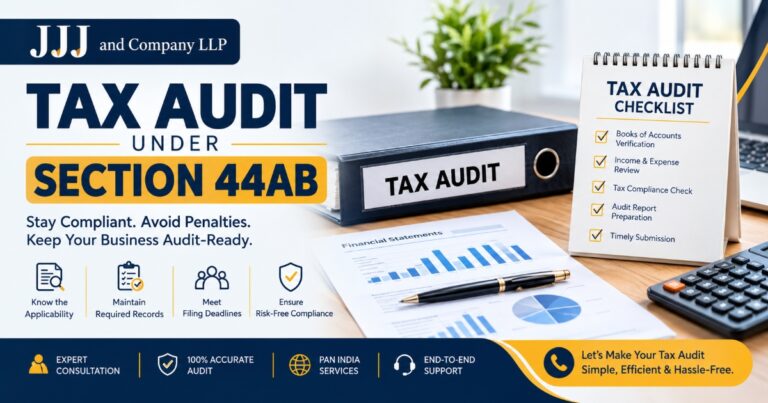
For businesses that qualify under audit provisions, complying with Tax Audit requirements before filing becomes equally important.
Professional assistance from a qualified CA for Business ITR Filing ensures that all applicable provisions are correctly interpreted and implemented.
Business ITR Due Dates (2026)
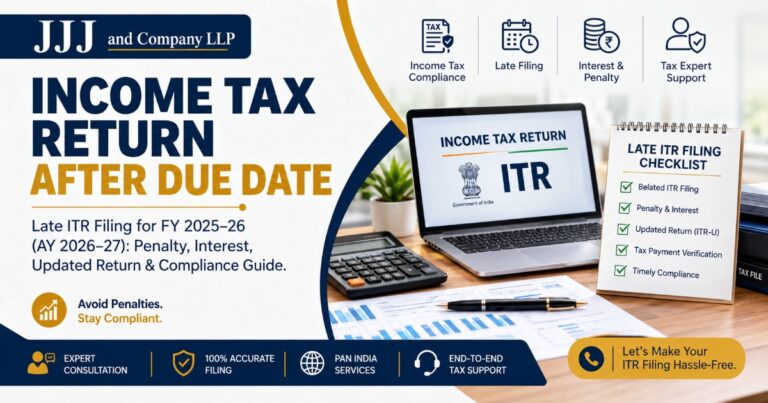
Meeting the prescribed ITR Due Date is one of the most critical aspects of business tax compliance. Filing after the due date may attract interest, penalties, delayed refunds, and restrictions on carrying forward certain business losses.
Although the Income Tax Department may revise deadlines through official notifications in specific circumstances, businesses should always plan based on the statutory due dates.
The following table summarizes the commonly applicable filing schedule for Assessment Year 2026–27.
| Category | Expected Due Date* |
| Businesses not requiring Tax Audit | 31 July 2026 |
| Businesses requiring Tax Audit | 31 October 2026 |
| Businesses requiring Transfer Pricing Report | 30 November 2026 |
*Subject to any extension notified by the Income Tax Department.
Rather than waiting until the final week, businesses should complete bookkeeping, account reconciliation, GST matching, TDS verification, and financial statement preparation well in advance. This proactive approach minimizes last-minute issues and allows sufficient time for review and corrections.
Documents Required for Business ITR Filing
Preparing documents in advance makes the filing process significantly smoother and reduces the chances of errors or delays.
Although documentation varies depending on the nature and size of the business, most entities should keep the following records readily available.
| Document | Purpose |
| PAN and Aadhaar (where applicable) | Business identification |
| Financial Statements | Profit & Loss Account and Balance Sheet |
| Bank Statements | Income and expense verification |
| GST Returns | Reconciliation of turnover |
| TDS Certificates | Credit verification |
| Books of Accounts | Supporting financial records |
| Investment & Deduction Proofs | Tax benefit claims |
| Previous Year’s ITR | Reference and continuity |
Additional records may also be required depending on the business.
- Audit reports, where applicable.
- Depreciation schedules for fixed assets.
- Loan statements and interest certificates.
- Foreign income or overseas transaction details, if any.
- Advance tax payment challans.
- Details relating to partner remuneration or director remuneration where applicable.
Businesses that maintain complete documentation throughout the year generally experience faster processing, fewer departmental queries, and greater confidence in the accuracy of their return.
At JJJ & Company LLP, our tax professionals assist businesses with document verification, return preparation, compliance review, and strategic Business Tax Planning, helping organizations meet their statutory obligations efficiently while reducing compliance risks.
Which ITR Form Should Your Business File?
Selecting the correct Income Tax Return (ITR) form is the first step toward accurate tax compliance. Filing the wrong form can lead to processing delays, notices from the Income Tax Department, or the need to file a revised return.
The applicable form depends on the legal structure of your business and the provisions under which it is taxed.
| Business Structure | Applicable ITR Form* |
| Sole Proprietorship | ITR-3 or ITR-4 (subject to eligibility) |
| Partnership Firm | ITR-5 |
| Limited Liability Partnership (LLP) | ITR-5 |
| Private Limited Company | ITR-6 |
| Companies claiming exemption under specific provisions | ITR-7 (where applicable) |
*The applicable form should always be selected based on the latest Income Tax Department guidelines and the nature of the taxpayer.
For example, a consultant operating as a sole proprietor under the regular taxation scheme generally files ITR-3, whereas an LLP engaged in professional services files ITR-5. A private limited company is generally required to file ITR-6 electronically.
Choosing the right return form is an important aspect of Business Tax Filing, and professional review can help ensure accuracy before submission.
Step-by-Step Process for Business ITR Filing
Although the filing process has become increasingly digital, businesses should follow a structured approach to minimize errors and ensure complete compliance.
The typical filing process involves the following stages:
- Finalize books of accounts after reconciling sales, purchases, expenses, and bank transactions.
- Verify GST returns, TDS credits, advance tax payments, and other statutory records.
- Prepare the Profit & Loss Account, Balance Sheet, and supporting financial statements.
- Determine taxable income after claiming eligible deductions and depreciation.
- Complete the applicable Business Income Tax Return form with accurate financial details.
- Validate the return, upload it through the Income Tax e-Filing portal, and complete electronic verification within the prescribed timeline.
Businesses requiring statutory audit should ensure that the audit is completed before filing the return, as audit reports are required to be submitted within the applicable deadlines.
Common Mistakes Businesses Should Avoid
Many tax notices arise not because of tax evasion, but because of avoidable filing mistakes. Even small discrepancies between financial records and tax returns can trigger unnecessary scrutiny.
Some of the most common errors include:
- Filing the incorrect ITR form.
- Reporting turnover that does not match GST returns.
- Ignoring TDS mismatches appearing in Form 26AS or the Annual Information Statement (AIS).
- Claiming deductions without adequate supporting documents.
- Missing depreciation adjustments.
- Filing after the applicable ITR Due Date.
- Failing to verify the return after submission.
- Incorrect reporting of partner remuneration, director remuneration, or business expenses.
Example
Suppose a trading company reports annual turnover of ₹1.8 crore in its GST returns but declares ₹1.65 crore in its Income Tax Return without a valid explanation. Such mismatches may result in notices seeking clarification and supporting documentation.
A thorough review before submission significantly reduces the likelihood of such issues.
Pro Tip:
Before filing your return, reconcile your books of accounts with GST returns, Form 26AS, AIS, and bank statements. Early reconciliation helps identify discrepancies before they become compliance issues.
Consequences of Late or Incorrect Business ITR Filing
Delaying your Income Tax Return for Business can have financial as well as operational consequences.
Depending on the circumstances and applicable provisions of the Income Tax Act, businesses may face:
| Consequence | Impact |
| Interest on unpaid tax | Additional financial liability |
| Late filing fees | Applicable under relevant provisions |
| Delayed tax refunds | Refund processing may be postponed |
| Loss carry-forward restrictions | Certain business losses may not be carried forward if returns are not filed within the prescribed time |
| Increased scrutiny | Higher possibility of notices and verification |
Apart from statutory consequences, delayed filing may also affect business credibility when applying for loans, participating in tenders, or seeking investment.
Timely Income Tax Compliance demonstrates sound financial governance and enhances the confidence of lenders, investors, and business partners.
Why Professional Assistance Makes a Difference
Business taxation involves much more than simply submitting an online return. Every business has unique transactions, deductions, compliance obligations, and reporting requirements that should be carefully reviewed.
Working with an experienced Income Tax Consultant offers several advantages:
- Accurate computation of taxable income.
- Proper selection of the applicable ITR form.
- Identification of eligible deductions and depreciation.
- Timely compliance with audit and filing requirements.
- Reduced risk of notices arising from reporting inconsistencies.
- Ongoing support for tax planning and future compliance.
At JJJ & Company LLP, we assist businesses of all sizes—from startups and MSMEs to established companies—with end-to-end Company ITR Filing, LLP ITR Filing, and Proprietorship ITR Filing services. Our team focuses on accuracy, regulatory compliance, and practical Business Tax Planning strategies that help businesses meet their statutory obligations with confidence.
Frequently Asked Questions (FAQs)
1. Is Business ITR Filing mandatory even if my business has incurred a loss?
Yes. Many business entities are required to file returns irrespective of profit or loss. Timely filing may also help preserve eligibility to carry forward certain business losses, subject to the provisions of the Income Tax Act.
2. Can I revise my Business Income Tax Return after filing?
Yes, if an error or omission is identified, a revised return may generally be filed within the timeline prescribed under the Income Tax Act, subject to applicable conditions.
3. What happens if I miss the due date?
Late filing may result in interest, late filing fees, delayed refunds, and restrictions on carrying forward eligible losses, depending on the applicable legal provisions.
4. Which businesses require a Tax Audit?
Tax audit requirements depend on factors such as turnover, receipts, and applicable provisions of the Income Tax Act. Businesses should evaluate their audit applicability each financial year.
5. Should small businesses hire a Chartered Accountant for ITR filing?
Even where filing appears straightforward, professional review helps ensure compliance, reduces filing errors, and supports better long-term tax planning.
Conclusion
Accurate and timely Business ITR Filing is more than a statutory responsibility—it is an important component of responsible financial management. From selecting the correct return form and maintaining proper documentation to meeting deadlines and avoiding reporting errors, every stage of the filing process contributes to stronger compliance and improved business credibility.
Whether you operate a proprietorship, partnership, LLP, or company, proactive tax planning and timely filing can help reduce compliance risks while supporting sustainable business growth.
If you need professional assistance with Business Tax Return preparation, CA for Business ITR Filing, audit support, or overall business tax compliance, JJJ & Company LLP offers practical, reliable, and compliance-focused solutions tailored to your business requirements.
Need expert assistance with your Business ITR Filing? Contact JJJ & Company LLP today to ensure your return is prepared accurately, filed on time, and aligned with the latest tax regulations.